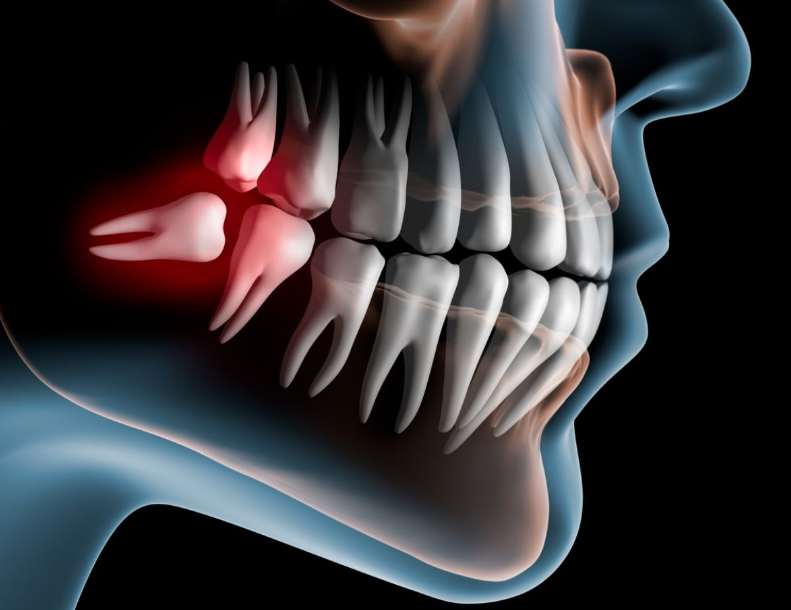
Wisdom teeth are the third set of molars, typically emerging between the ages of 16 and 25.
Why do erupting wisdom teeth cause problems?
As humans have evolved, our jaws have become smaller. Due to this, there is often not enough space for the wisdom teeth to emerge properly. As a result, they may erupt at an angle or remain impacted (trapped beneath the gums). When they grow at an angle, it’s difficult to clean the area properly, leading to food accumulation. This can cause tooth decay in the wisdom tooth and neighboring teeth, as well as gum inflammation—leading to most of the common issues.
Is Wisdom tooth removal painful?
The procedure is done under local anesthesia, making it quite comfortable. Some swelling may occur after the extraction, but it usually subsides within 2 to 5 days. Any post-operative discomfort can be effectively managed with prescribed painkillers and antibiotics.
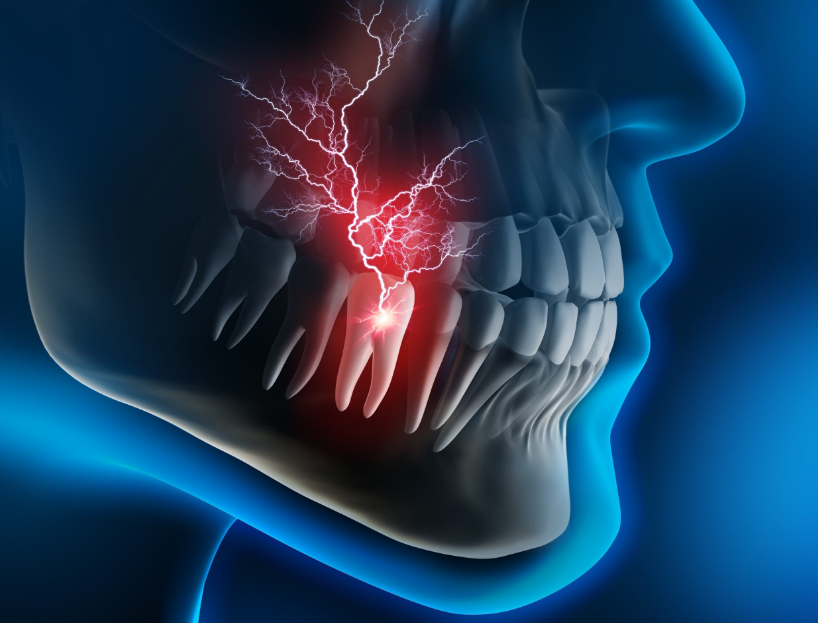
Pain in wisdom tooth
Pain in wisdom tooth
Do I always need to get my wisdom teeth removed
No. Wisdom teeth should only be removed if they are causing any of the following problems-
Repeated pain and swelling in the area
Swelling in surrounding gum
Decayed wisdom tooth
Decay of tooth in front of wisdom tooth (second molar)
No opposing tooth
Does a wisdom tooth always need to be removed?
If the wisdom tooth has fully erupted in the correct position and has a proper opposing tooth to bite against, it can function well during chewing and does not need to be removed.
Should a wisdom tooth be replaced with an artificial tooth?
No, wisdom teeth do not need to be replaced with artificial teeth after removal.